Ham Bone Broth Recipe
Ham Bone Broth is a deeply comforting, savory stock made from a leftover ham bone, simmered slowly with onions, carrots, celery, garlic, and herbs until the kitchen smells warm and rich. The broth turns slightly golden and silky, with a gently smoky flavor and a hint of sweetness from the ham. It’s perfect for sipping from a mug on a cold day or using as a base for soups, beans, and casseroles. Simple, frugal, and full of old-fashioned goodness, this one transforms leftovers into something truly special.

This Ham Bone Broth is wonderfully versatile: use it in pea soup, potato soup, lentils, beans, or rice, or simply warm it with a squeeze of lemon in a mug. It’s a smart way to stretch a holiday ham or Sunday roast into several more meals. You can keep the broth very simple, or layer in extra herbs and garlic for a stronger flavor. It also freezes beautifully, so you can always have homemade broth on hand.
Ingredients
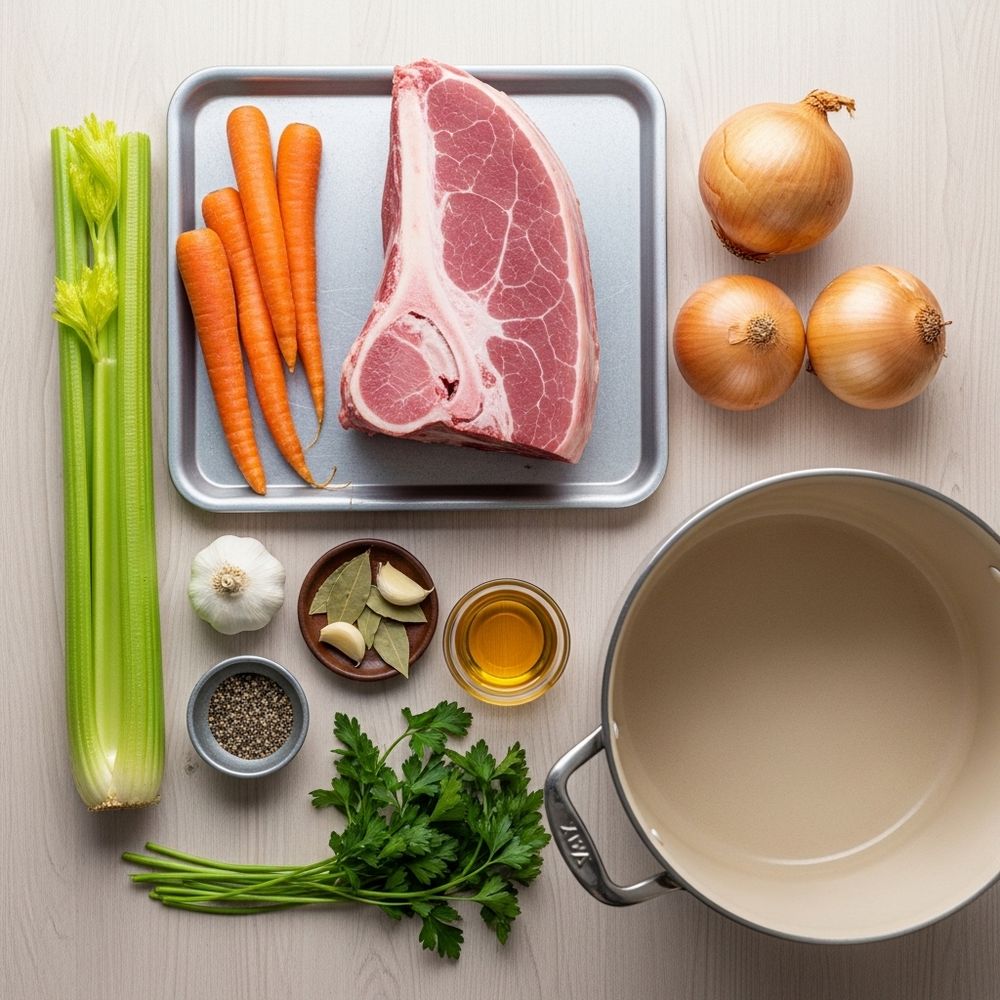
A handful of simple pantry vegetables and a leftover ham bone are all you need to make a rich, flavorful broth that tastes like it simmered all day.
- Leftover ham bone with some meat attached – 1 large (from a baked ham)
- Carrots, roughly chopped – 2 medium
- Celery stalks, roughly chopped – 2
- Yellow onion, quartered – 1 large
- Garlic cloves, smashed – 4
- Bay leaves – 2
- Whole black peppercorns – 1 teaspoon
- Apple cider vinegar (helps extract flavor) – 1 tablespoon
- Fresh parsley stems (or a small handful of sprigs) – 6–8 stems
- Water – 10–12 cups (enough to cover the bone by about 2.5–5 cm / 1–2 inches)
- Optional: fresh thyme sprigs – 3–4
- Optional: salt – to taste at the end
Servings
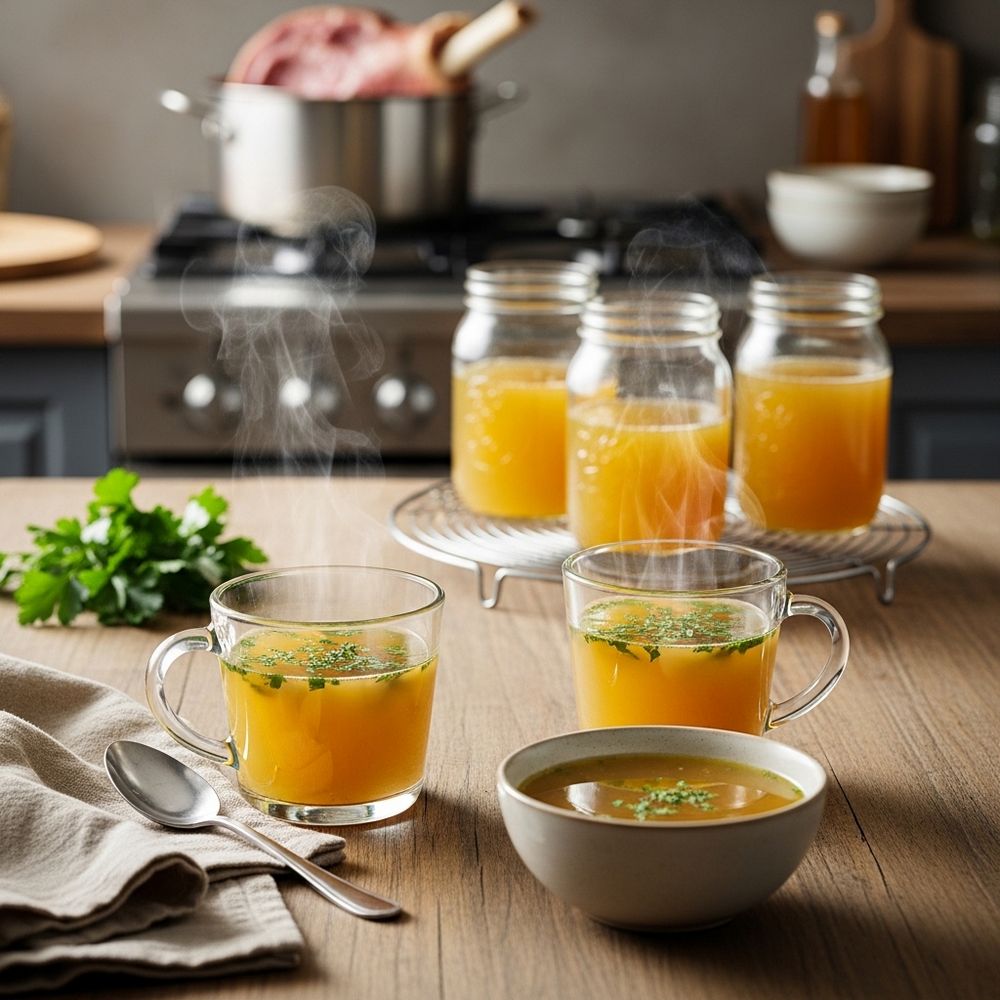
This recipe makes about 8–10 cups of Ham Bone Broth, enough to serve 4 people as a generous sipping broth in mugs, or to use as the liquid base for 1–2 large pots of soup or beans.
How to Make It
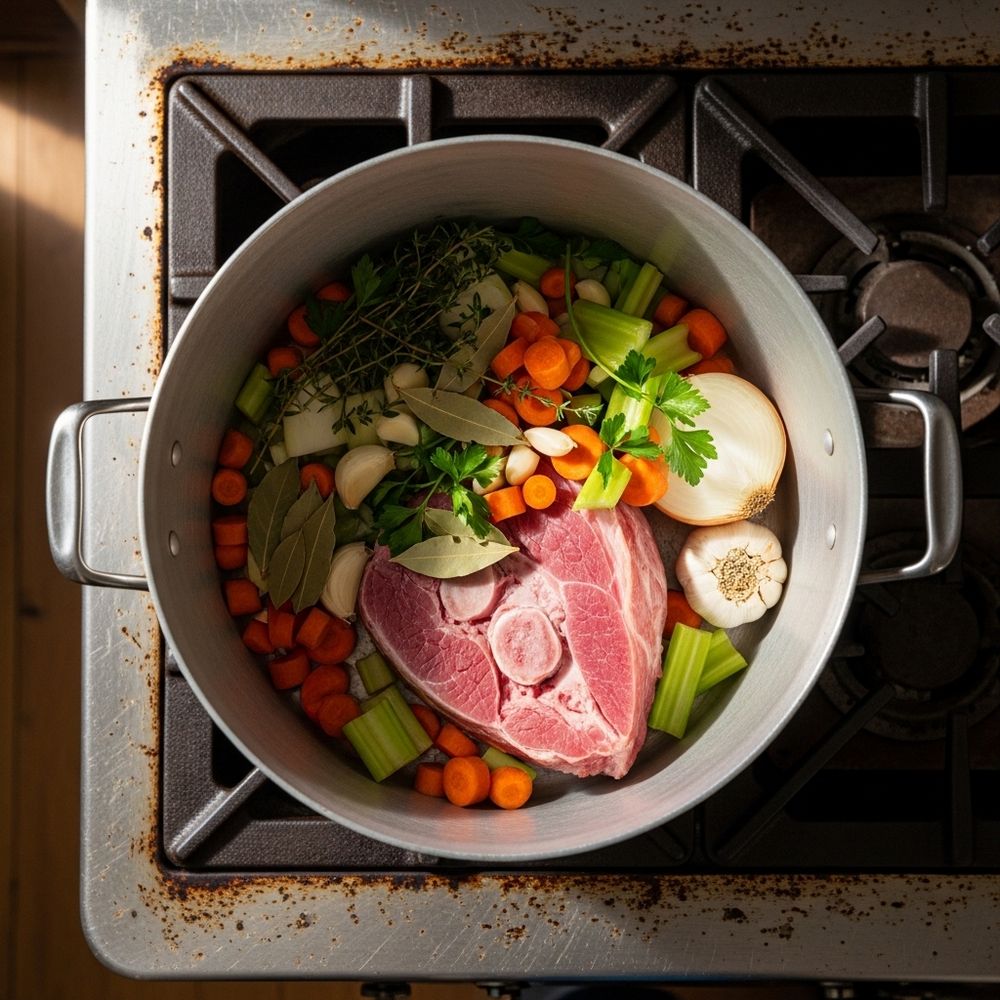
Place the ham bone into a large stockpot or Dutch oven. Add the carrots, celery, onion, garlic, bay leaves, parsley stems, peppercorns, and optional thyme around the bone.
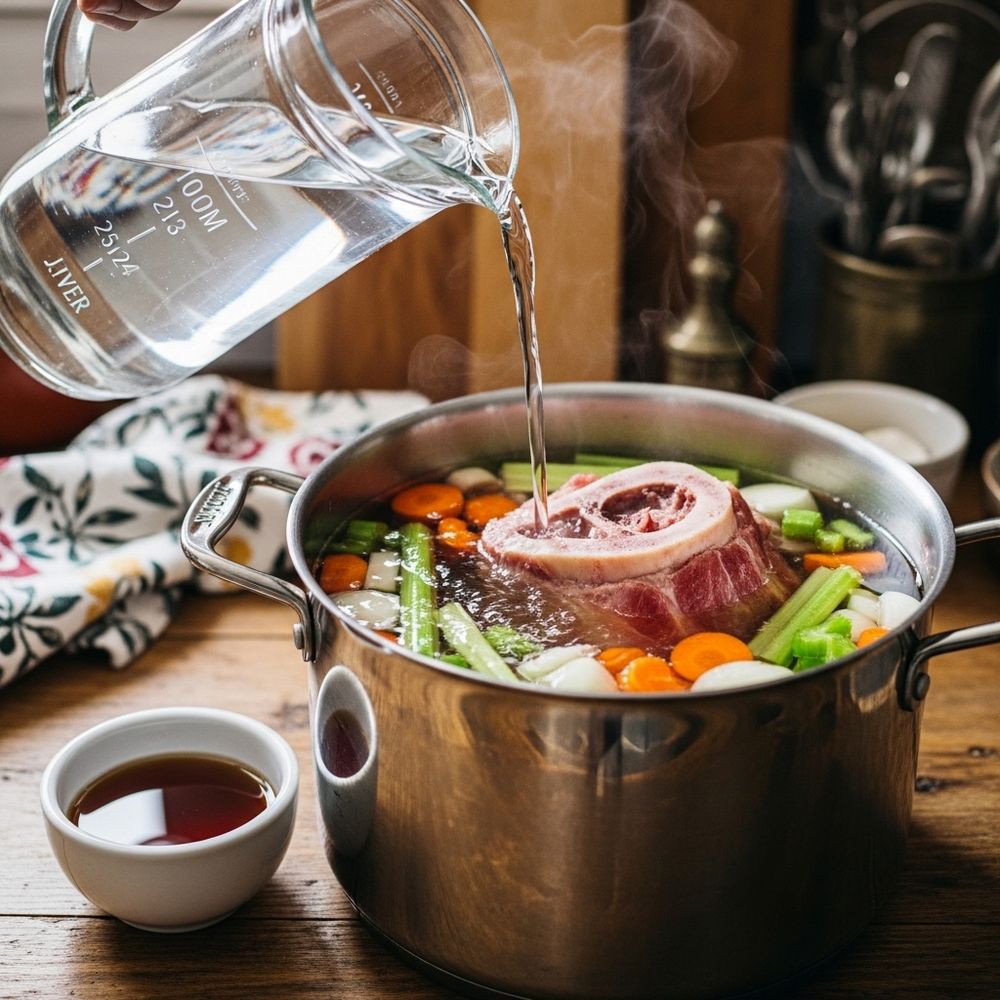
Pour in enough water to cover the ham bone by about 2.5–5 cm (1–2 inches). Add the apple cider vinegar. Do not add salt yet; the ham is already salty.
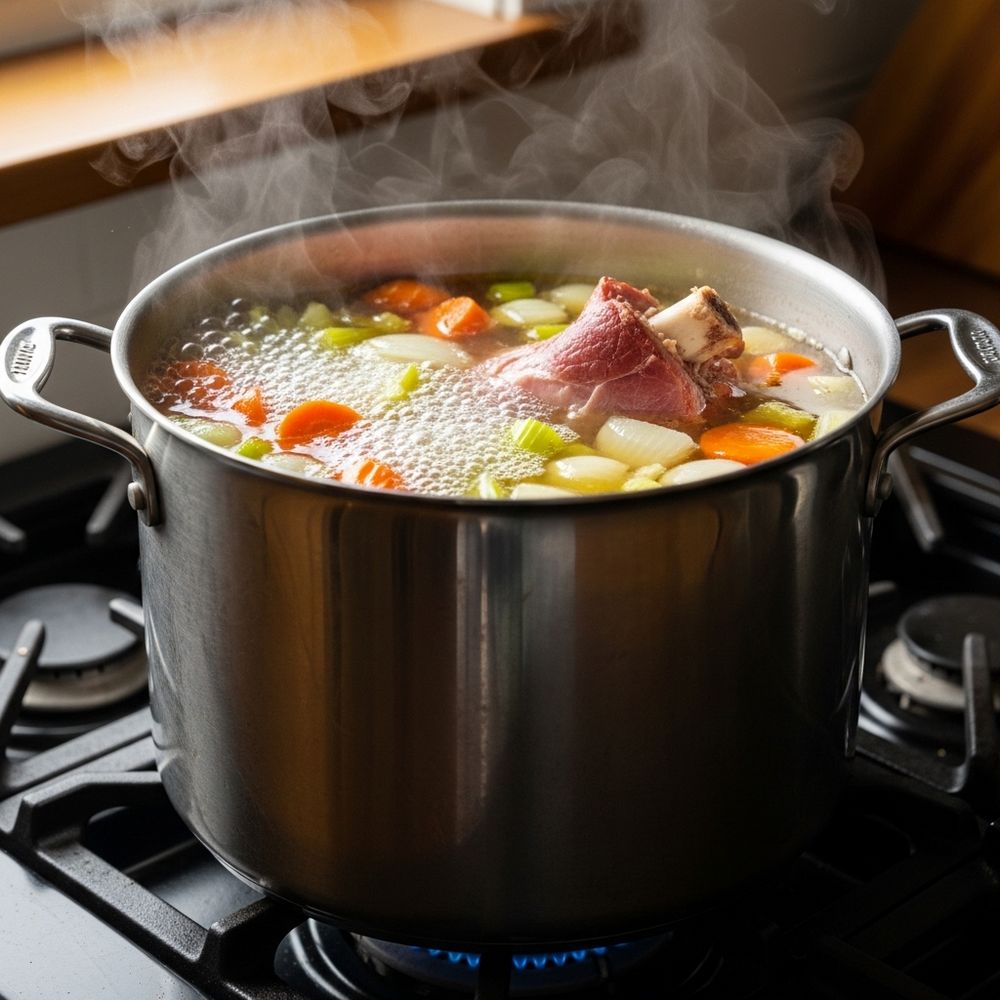
Bring the pot to a gentle boil over medium-high heat. Once it reaches a boil, immediately reduce the heat to low so the broth simmers very gently with just a few small bubbles.
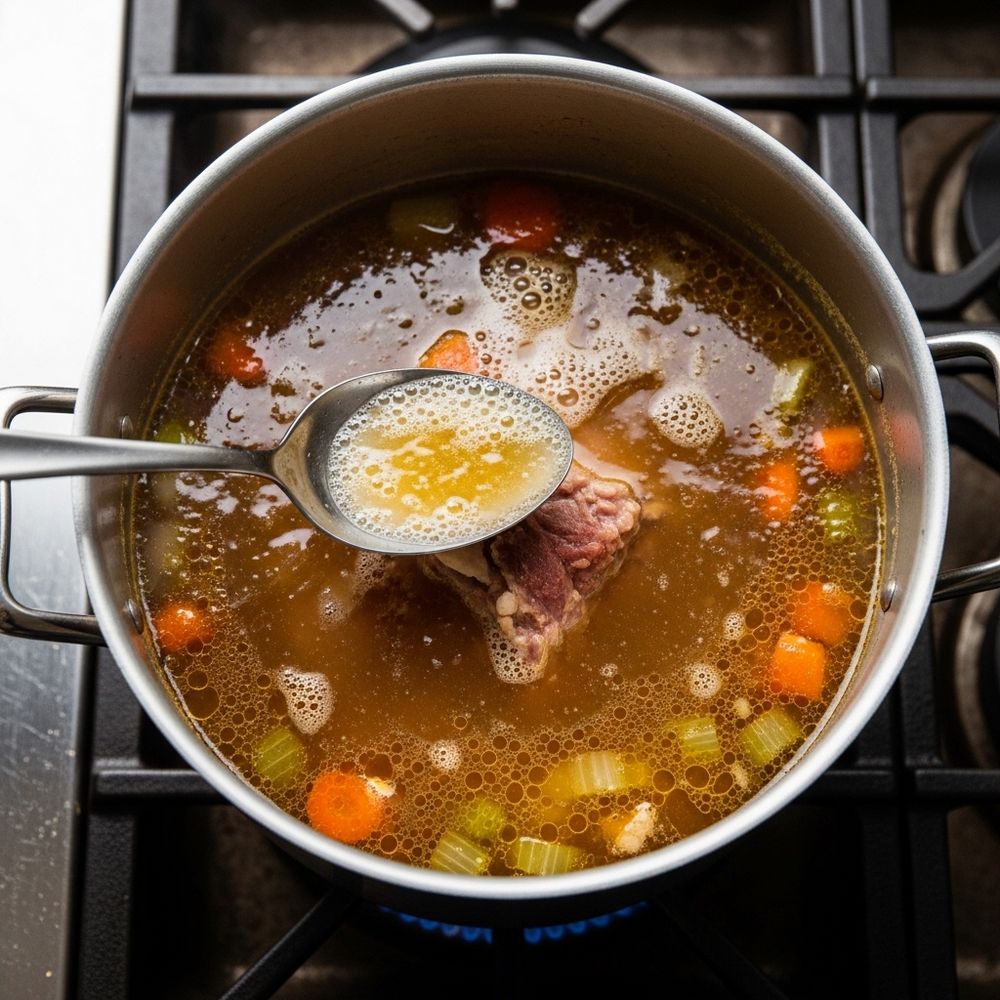
Simmer uncovered for 3–4 hours, occasionally turning the bone and skimming off any foam or excess fat that rises to the surface with a spoon or ladle.
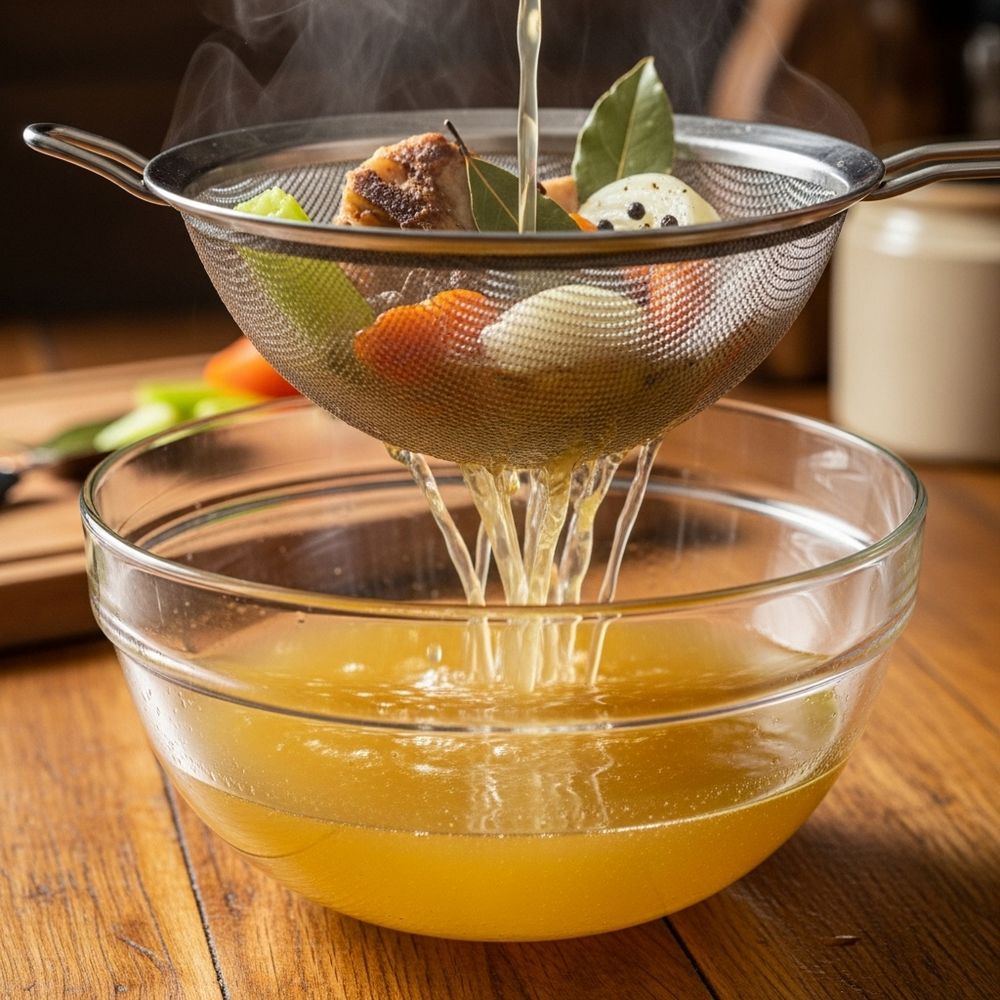
When the broth is rich and flavorful, remove the ham bone and large vegetables with tongs. Strain the broth through a fine-mesh sieve into a large bowl or clean pot to remove remaining solids.
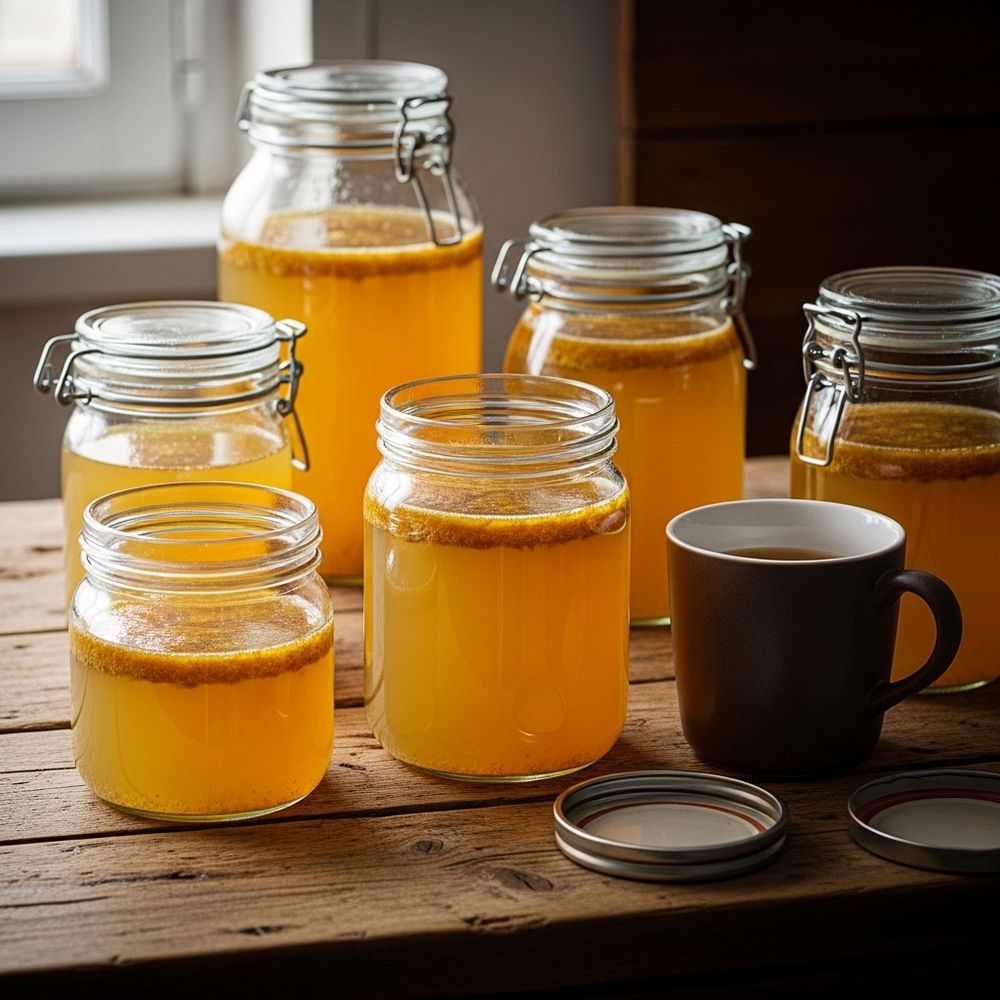
Taste and add salt only if needed. Let the broth cool slightly, then refrigerate until cold. Skim the solidified fat from the top if you like, and store the broth in jars or containers for up to 4–5 days, or freeze for longer.
Pro Tip
For the deepest flavor, simmer the broth very gently for the full 4 hours and let it cool with the bone still in the pot before straining.
Ham Bone Broth
Notes
Let the broth chill completely, then lift off the solid fat for a lighter broth, or keep some for extra richness in hearty soups.
FAQs
Q1. Can I make Ham Bone Broth in a slow cooker?
A1. Yes. Cook on low for 8–10 hours, then strain and cool as usual. It’s very hands-off and still develops great flavor.
Q2. How long does Ham Bone Broth keep in the fridge?
A2. Store in airtight containers in the refrigerator for up to 4–5 days. If it smells off or looks cloudy and strange, discard it.
Q3. Can I freeze this broth?
A3. Absolutely. Freeze in jars (leaving headspace), freezer-safe containers, or ice cube trays for up to 3 months. Thaw in the fridge or gently on the stove.
Q4. Do I have to add apple cider vinegar?
A4. No, but it helps extract more flavor and nutrients from the ham bone. If you prefer, you can omit it or replace it with a splash of lemon juice.
Q5. My broth turned out very salty. What can I do?
A5. Dilute the broth with unsalted water and simmer briefly, or mix with unsalted stock. Next time, avoid adding salt until the very end.
Q6. Can I reuse the ham bone for a second batch?
A6. Usually one long simmer uses most of the flavor. You might get a lighter second batch, but it will be much weaker. Most people use it just once.