Kimbap Bites (Korean Rice Rolls) Recipe
Kimbap Bites (Korean Rice Rolls) are colorful, neatly packed little rolls of seasoned rice and crisp vegetables, wrapped in roasted seaweed and sliced into bite-sized pieces. Each bite gives you a balance of chewy rice, crunchy carrot and cucumber, savory egg and crab, plus the gentle nuttiness of sesame oil. They are perfect for lunch boxes, picnics, party platters, or an easy make-ahead snack. Unlike sushi, these rolls use simple pantry-friendly fillings and no raw fish, making them approachable, family friendly, and ideal for preparing in advance without losing their fresh, vibrant appeal.
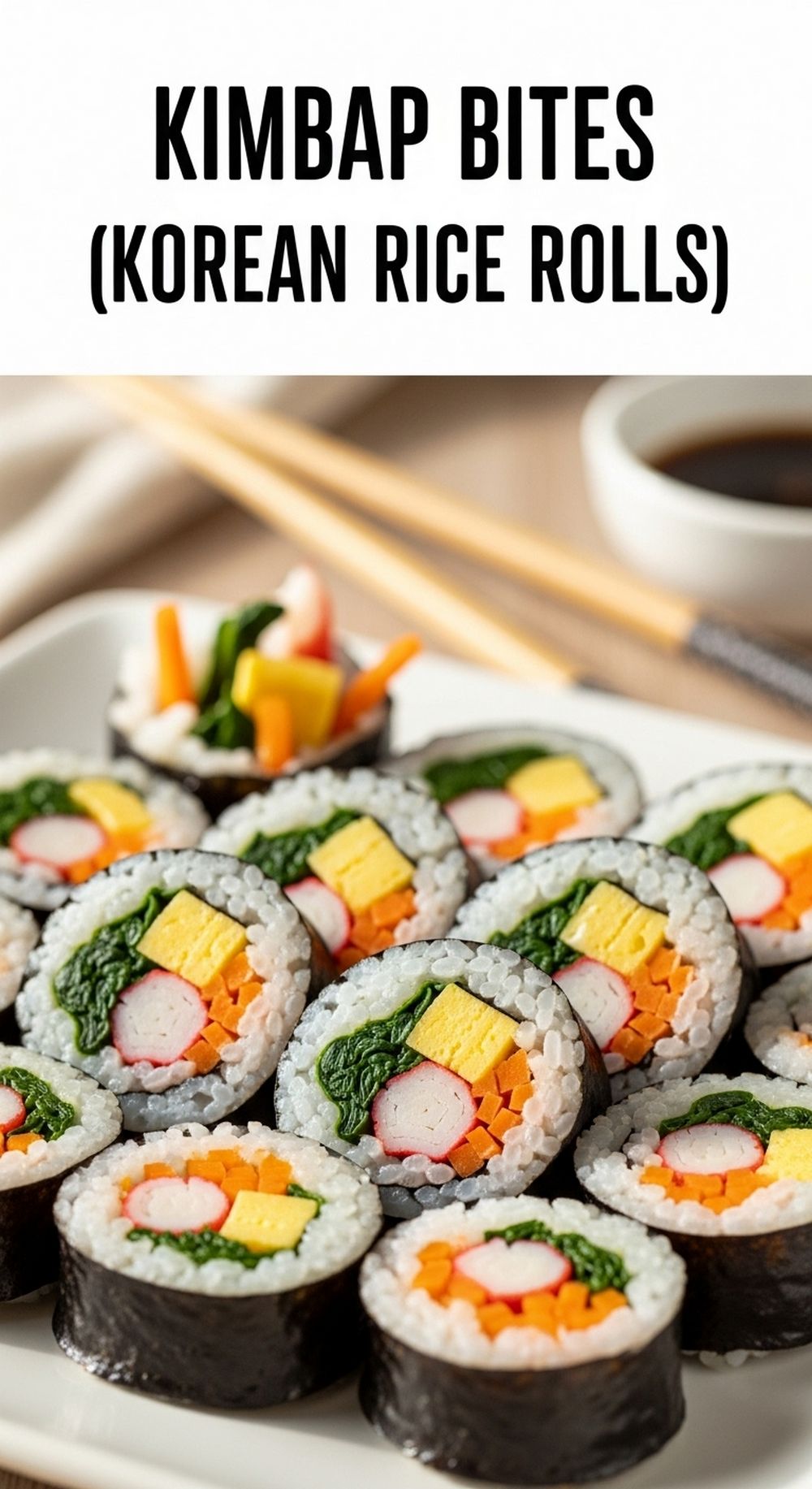
These Kimbap Bites are flexible enough to suit almost any occasion. Pack them into lunch boxes, arrange them on a party platter, or pair them with miso soup for a light dinner. You can easily swap fillings to match what you have on hand, using tuna, leftover bulgogi, or extra vegetables. They taste great at room temperature, travel well, and hold their shape, which makes them ideal for picnics and potlucks where you need something pretty, portable, and easy to share.
Ingredients
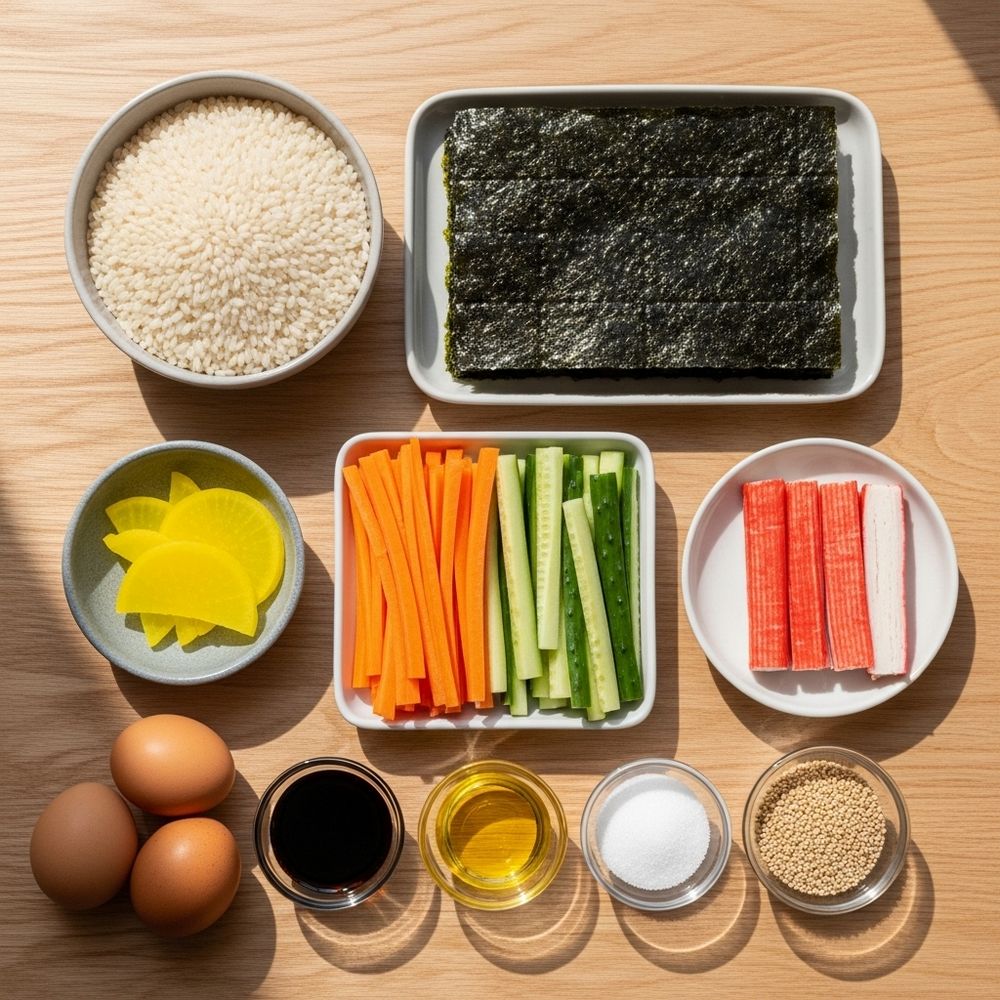
Here is everything you need to make neat, flavorful kimbap rolls with a good balance of rice, vegetables, and protein.
- Short-grain rice – 2 cups (uncooked), well rinsed
- Water – 2 ½ cups (for cooking rice)
- Salt – 1 teaspoon (for rice)
- Toasted sesame oil – 1 tablespoon (for rice)
- Toasted sesame seeds – 1 teaspoon
- Roasted seaweed sheets (gim or nori) – 4 large sheets
- Eggs – 2
- Salt – pinch (for eggs)
- Neutral oil – 1 teaspoon (for cooking eggs)
- Carrot – 1 small, peeled and cut into thin matchsticks
- Cucumber – 1 small, seeds removed, cut into thin matchsticks
- Yellow pickled radish (danmuji) – 4 long strips
- Imitation crab sticks – 4 sticks (or cooked crab/meat strips)
- Soy sauce – 2 teaspoons (for seasoning vegetables)
- Sugar – 1 teaspoon
- Toasted sesame oil – 1 teaspoon (for vegetables)
- Neutral oil – 1 teaspoon (for sautéing carrot)
For dipping sauce (optional):
- Soy sauce – 2 tablespoons
- Rice vinegar – 1 teaspoon
- Toasted sesame oil – ½ teaspoon
- Sugar – ½ teaspoon
- Toasted sesame seeds – ½ teaspoon
- Pinch of chili flakes (optional)
Servings
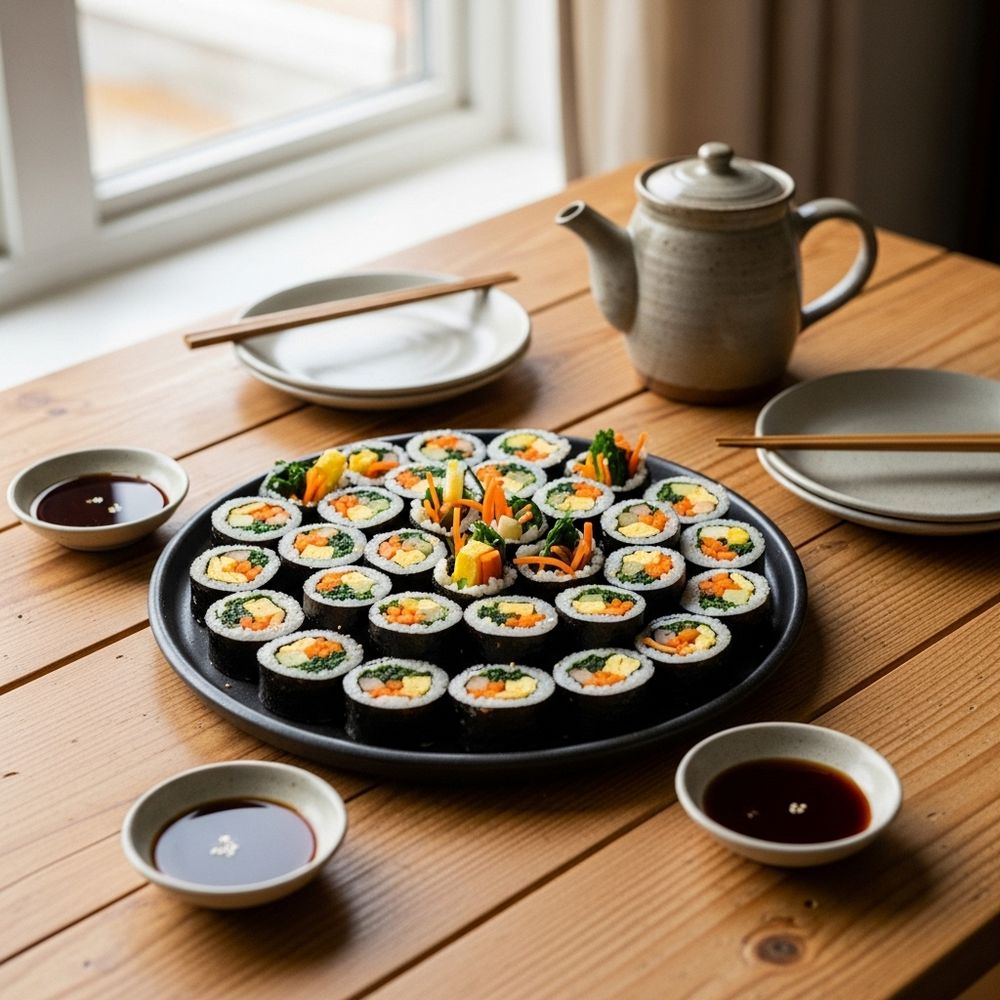
This recipe makes about 32–40 bite-sized pieces, depending on how thickly you slice each roll. That is enough for 4 people as a light meal or 6–8 people as a snack or party appetizer alongside other dishes.
How to Make It
Cook and season the rice
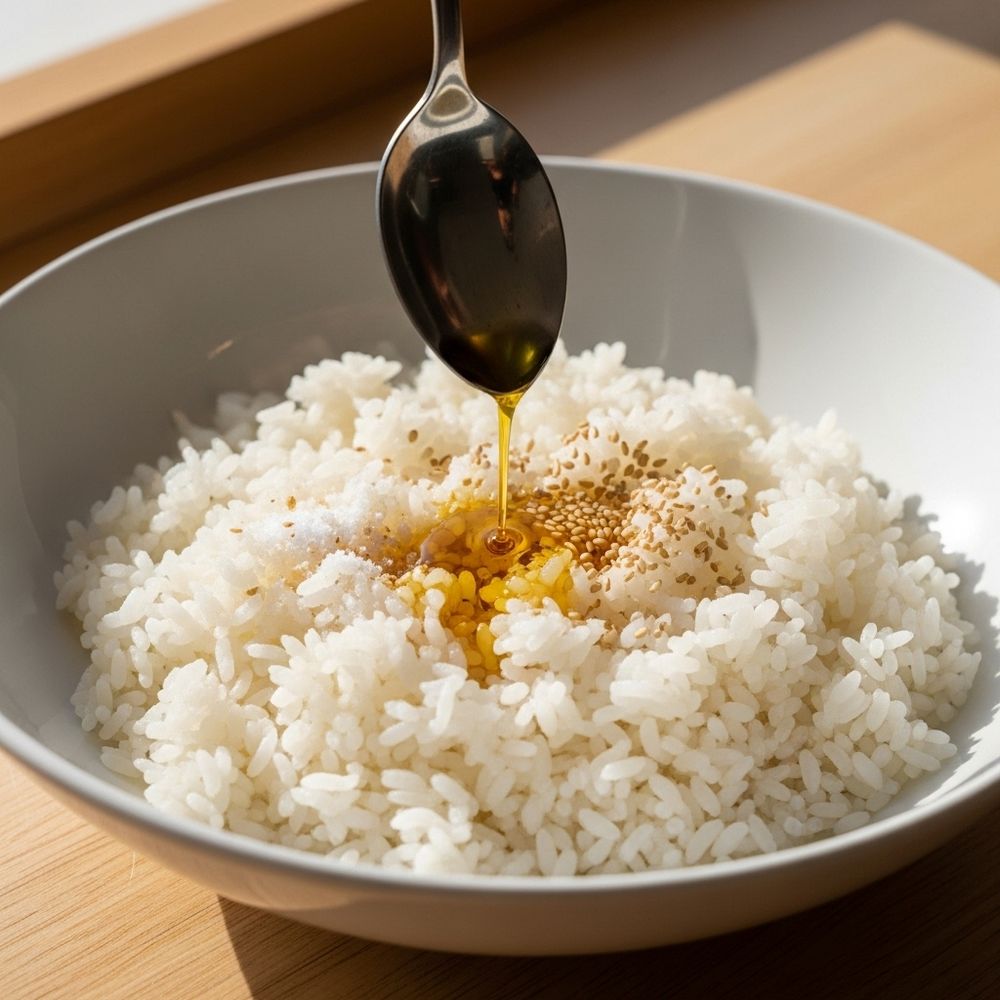
Rinse the short-grain rice until the water runs mostly clear. Cook with the measured water in a rice cooker or saucepan. Once cooked, gently fluff into a wide bowl, cool for 5–10 minutes, then season with salt, sesame oil, and sesame seeds. Mix gently so the grains stay intact.
Prepare the egg and vegetables
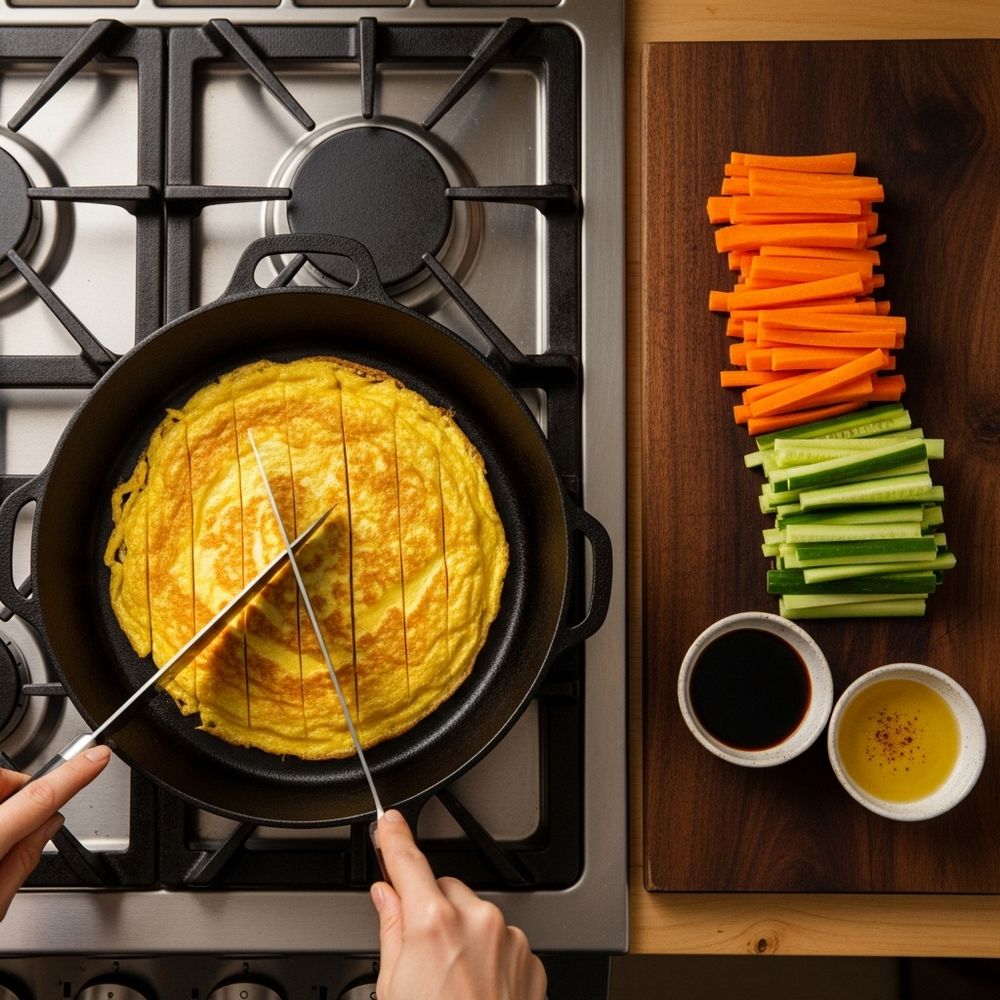
Beat the eggs with a pinch of salt. Heat a small pan with a little oil and cook a thin omelet on low heat, then roll and slice into long strips. In the same pan, lightly sauté carrot sticks with a splash of soy sauce and sugar until just tender but still crisp. Pat the cucumber dry with a paper towel and toss both vegetables with a little sesame oil.
Set up the rolling station
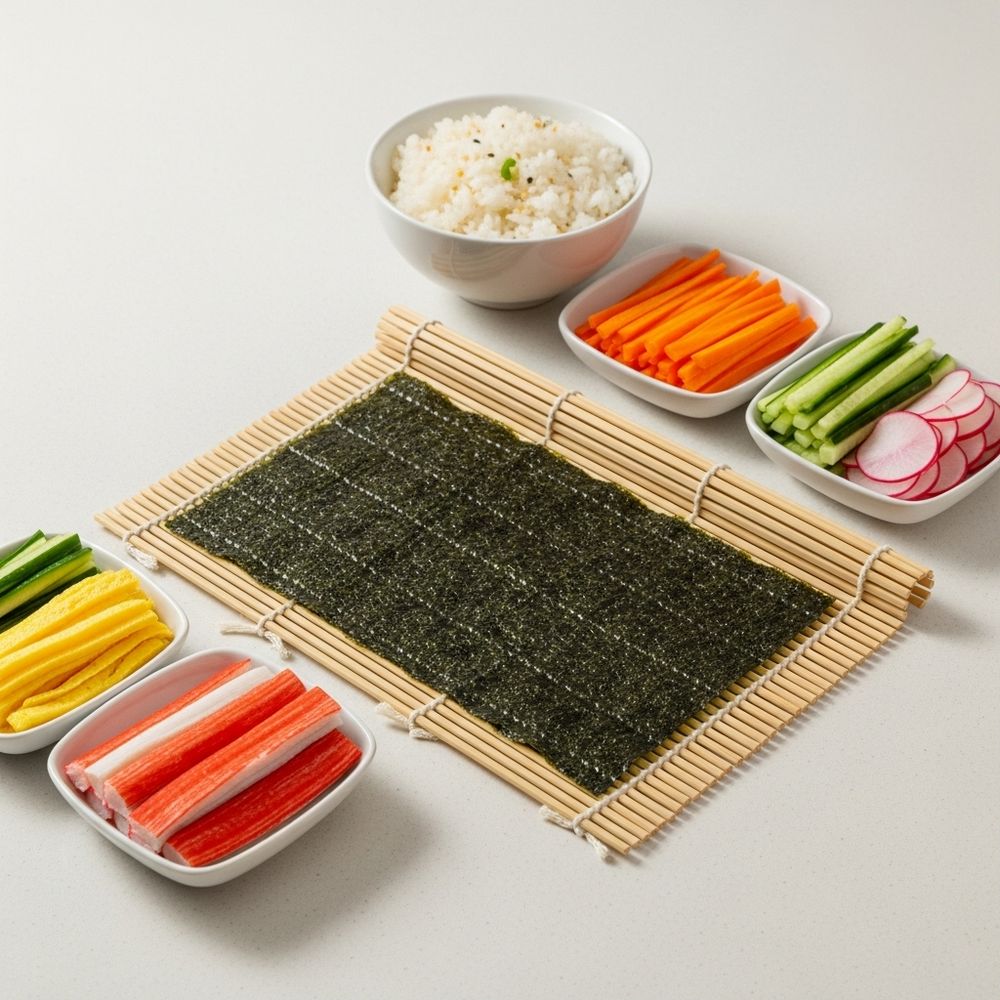
Place a bamboo sushi mat on your work surface and put a seaweed sheet on top, shiny side down, with the long side facing you. Have your warm seasoned rice, egg strips, sautéed carrots, cucumber sticks, pickled radish, and crab sticks within easy reach. Keep a small bowl of water nearby to dip your fingers so the rice does not stick.
Fill and roll the kimbap
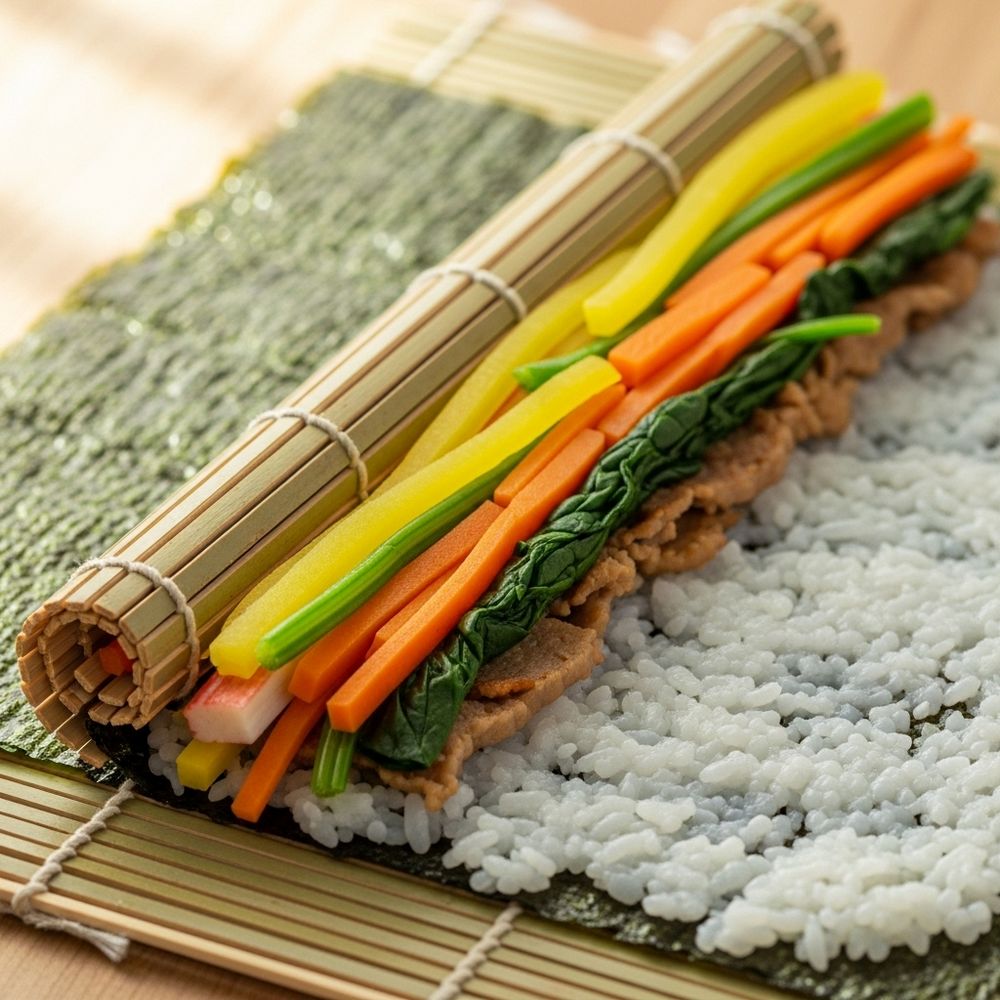
With damp fingers, spread a thin, even layer of rice over about two-thirds of the seaweed sheet, leaving the top third empty. Arrange one strip each of omelet, carrot, cucumber, pickled radish, and crab stick across the rice in a horizontal line near the bottom edge. Using the mat, roll the seaweed tightly over the fillings, pressing gently but firmly, until you reach the top. Seal the edge by pressing or lightly moistening it. Repeat with remaining sheets.
Slice into bite-sized pieces
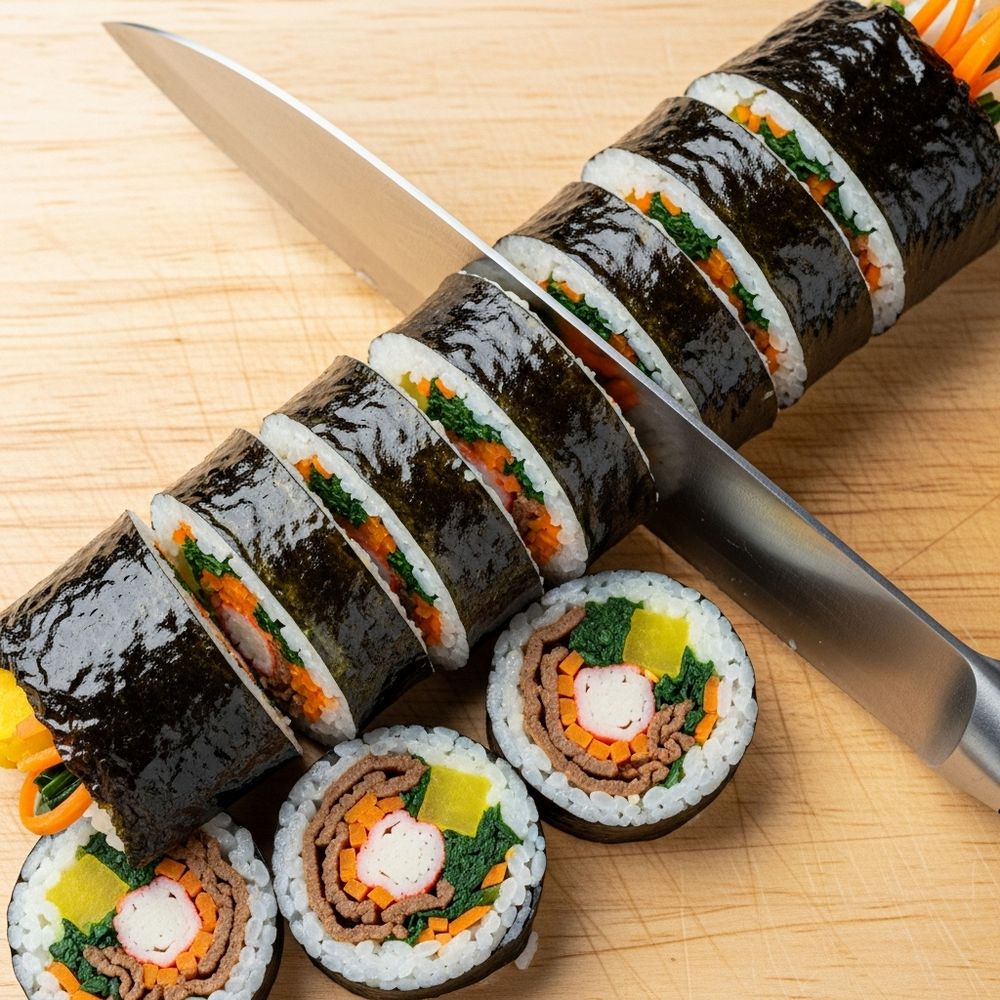
Lightly brush each roll with a tiny bit of sesame oil for shine, if you like. Using a very sharp knife, wipe the blade with a damp cloth, then slice each roll into 8–10 even pieces. Clean the knife between cuts so the slices stay neat and the rice does not smear.
Make dipping sauce and serve
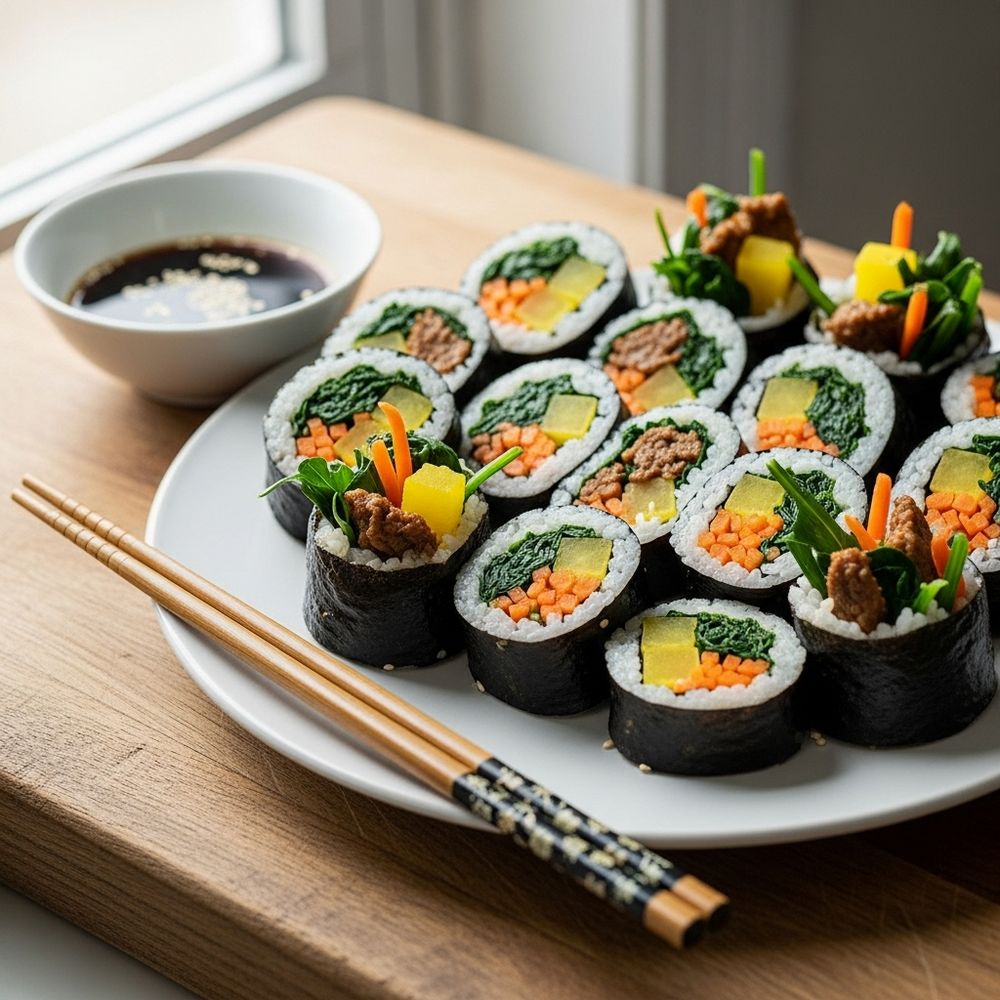
For the optional dipping sauce, mix soy sauce, rice vinegar, sesame oil, sugar, sesame seeds, and chili flakes in a small bowl until the sugar dissolves. Arrange the kimbap bites cut side up on a serving platter. Serve immediately at room temperature, or pack into containers once cooled for lunch boxes and picnics.
Pro Tip
Spread the rice in a thin, even layer and keep it slightly warm when rolling. Warm, lightly seasoned rice sticks better and helps the rolls hold a tight shape.
Kimbap Bites (Korean Rice Rolls)
Notes
Use a sharp, damp knife and wipe it between cuts to keep each slice neat and prevent rice from sticking and tearing the seaweed.
FAQs
Q1. Can I make kimbap bites ahead of time?
A1. Yes. Make them in the morning for lunch or up to 6–8 hours ahead. Store covered at cool room temperature or lightly chilled, then let them warm slightly before serving.
Q2. How do I keep the seaweed from getting soggy?
A2. Let the rice cool slightly before rolling and avoid overfilling with wet ingredients. Pat cucumbers dry and do not refrigerate for too long, as moisture softens the seaweed.
Q3. What can I use instead of crab sticks?
A3. You can use cooked beef strips, canned tuna mixed with a little mayo and seasoning, or tofu strips. Just keep the pieces long and thin so they roll easily.
Q4. Is this recipe vegetarian-friendly?
A4. To make it vegetarian, skip the crab sticks and use tofu, extra omelet, or more vegetables. To make it vegan, omit the eggs and use marinated tofu or mushrooms instead.
Q5. How do I reheat leftover kimbap?
A5. Kimbap is usually enjoyed at room temperature. If slightly chilled, let it sit out for 15–20 minutes. Avoid microwaving, which can make the rice tough and the seaweed chewy.
Q6. Why are my rolls falling apart when I slice them?
A6. The rice layer may be too thick or too loose, or the roll not tight enough. Roll more firmly, use slightly warm rice, and always use a sharp, damp knife when slicing.